Categories
News

Seventeen projects promoting cross-disciplinary research across the University of Georgia have been awarded 2025 Teaming for Interdisciplinary Research Pre-Seed grants.

In partnership with the Office of the Senior Vice President for Academic Affairs and Provost, the Office of Research provides pre-seed funding to facilitate interdisciplinary faculty teams and collaboration across critical and emerging research topics. To qualify, teams must consist of six to 12 faculty members from at least three disciplines.

The grants’ purpose is to jump-start interdisciplinary projects through low-dollar, high-impact pre-seed awards that prioritize relationship building and idea generation over immediate results.

“These seed grant programs incentivize teams to form around interesting new ideas, and those teams are often successful in going after other funding, even if they don’t get one of our awards,” said Nate Nibbelink, associate vice president for strategic research growth in the Office of Research. “It’s been a real benefit in helping teams incubate novel research ideas and be better prepared to apply for the Presidential Interdisciplinary Seed Grant competition or other external funding.”

Funding is determined by the number of people on the team — $500 per faculty member — with awards averaging around $5,000. Out of 26 submitted proposals, 17 were awarded, totaling $77,000 in total funding.

Health was a recurring theme throughout several project proposals, which Nibbelink attributes to the impending launch of the university’s School of Medicine and School of Nursing.

Below is a snapshot of selected awarded projects. For a full list of the 2025 cohort, visit the TIR Pre-Seed website.

Forwarding Advanced Technologies in the Health Professions: An Interdisciplinary Team Formation Initiative

Mary Frances Early College of Education Professor Matthew Schmidt will lead a project that explores the use of artificial intelligence and extended reality in health professions education. The goal is to improve how health professionals learn complex material, practice clinical decision-making and communicate across disciplines and care settings.

“By bringing together transdisciplinary expertise across pharmacy, medicine, education, engineering and artificial intelligence,” Schmidt said, “we’re building the groundwork needed to pursue competitive federal funding and to position UGA as a leader in this space.”

Team members include Richard Lamb (College of Veterinary Medicine), Jie Lu (Mary Frances Early College of Education), Prashant Doshi (School of Computing), Kyle Johnsen (College of Engineering), Sun Joo “Grace” Ahn (Grady College of Journalism and Mass Communication), Erica Brownfield (School of Medicine), Janette Hill (Education and Medicine) and the College of Pharmacy’s Eunice Kim, Joshua Cabellero, Michael Fulford and Susan Smith.

Cultivating Care: Advanced Therapeutic Horticulture for Georgia’s Well-being and Resilience

Jennifer Cruse-Sanders, director of the State Botanical Garden of Georgia, leads another health-related project incorporating environmental health, clinical expertise and community engagement to explore how horticulture therapy can support people living with Alzheimer’s disease. The botanical garden will serve as the project’s primary research space, while the team brings together academic research, applied practice and community outreach.

“Supporting people living with dementia and their care partners through horticultural therapy requires a multifaceted approach,” Cruse-Sanders said. “Each team member contributes unique expertise toward our shared goals. After four years of piloting this work, seed grant funding will allow us to convene a community leadership summit to shape the project’s future direction.”

Team members include Cora Keber (Public Service and Outreach), Jenay Beer (College of Public Health), Sheri Dorn (College of Agricultural and Environmental Sciences), Leo Lombardini (CAES), Michelle Elliott (PSO), Sharon Liggett (PSO) and Katherine Melcher (College of Environment and Design).

Developing the One Georgia Climate and Health Extension Center

Franklin College of Arts and Sciences Professor Patricia Yager will lead an effort to build the foundation for a Georgia-wide Climate and Health Extension Center, designed to connect UGA researchers with communities across the state to address climate-related health challenges. According to Nibbelink, the project has been invited to submit a full proposal to the Burroughs Wellcome Fund. If approved, that funding will lay the groundwork for the proposed center, demonstrating how TIR funding can act as a catalyst rather than an endpoint.

 “Climate is a universal factor affecting our health, but the solutions are complex and require interdisciplinary approaches,” Yager said. “The BWF opportunity motivated us to assemble a team of UGA experts from climate, health, medicine, ecological sciences and the humanities, many of whom have never worked together before.”

Team members include Erin Lipp (Public Health), Allisen Penn (College of Family and Consumer Sciences), Erica Brownfield (Medicine), Pejman Rohani (Odum School of Ecology), Jonathan Mochel (CVM), Christina Fuller (Engineering), Scott Carver (Ecology), Andrew Grundstein (Franklin-Geography), Lisa Renzi-Hammond (Public Health) and Krista Capps (Ecology).

Tidal Flow: Building Experiential Data Visualization Through Art, Science and Systems Thinking

Lamar Dodd School of Art Professor Michael Marshall is teaming up with UGA Marine Institute Director Merryl Alber and others to study tidal systems along Georgia’s coast using art as a lens for understanding, interpreting and communicating complex ecological processes. Rather than treating art as an add-on to science, the project positions artistic practice as a core research method, capable of revealing new insights into environmental systems.

“Every discipline brings its own superpower,” Marshall said. “Our scientists provide and decode the data, our geographers and mathematicians model it, and our artists and musicians translate it into visceral experiences.”

Team members include Maria Artemis (School of Art), Daniel Bara (Hugh Hodgson School of Music), Sergio Bernardes (Franklin-Geography), Anna Harper (Franklin-Geography), Caner Kazanci (Franklin-Mathematics), Peter Lane (Music), Joan Sheldon (Franklin-Marine Sciences) and Patricia Yager (Franklin-Marine Sciences).

Categories
News

Several dozen UGA faculty members converged at the University of Georgia Center for Continuing Education & Hotel on Nov. 20 for a daylong conversation about how to propel UGA’s research enterprise to the next level of its growth and evolution.

The second annual Research Summit, “Inquiring into the Nature of Things: Convergence and Divergence in a Dynamic Research Landscape,” represented an opportunity for some of UGA’s most research-engaged faculty to wrestle with the challenges facing the research enterprise and offer their input for charting the best path forward. The summit was co-sponsored by the Office of Research and the Office of the Senior Vice President for Academic Affairs and Provost.

“This event not only celebrates UGA’s strengths but will create lasting impact on the UGA research enterprise by identifying opportunities for accelerating interdisciplinary research,” said Benjamin C. Ayers, senior vice president for academic affairs and provost. “Interdisciplinary research is more than simply combining different disciplines — it is a dynamic and evolving process that integrates knowledge, methods and perspectives to develop a new understanding of a problem. The complex challenges facing our society require this multifaceted approach.

“I am proud that faculty at UGA have embraced this spirit of collaboration in their drive to develop new knowledge and uncover new solutions.”

Following less than a year after the first Research Summit was held in April (future events will be held each fall), the event followed a consistent format of presentations followed by brief brainstorming sessions. UGA leaders and experts presented on such topics as the Innovation District, research “Creative Collisions” and other matchmaking events held this year, Public Service and Outreach and the research opportunities it can offer, incorporating the arts and humanities into research, and more.

“The energy in the room was exceptional,” said Jessica Muilenburg, associate vice president for research and professor in the College of Public Health. “We had productive sessions exploring strategies to address key issues affecting faculty, including well-being, mentoring and engagement opportunities. Many of us connected with faculty we can work with and learn from in the future.”

Muilenburg and Nate Nibbelink, associate vice president for research and professor in the Warnell School of Forestry and Natural Resources, were the summit’s lead organizers.

Among the many takeaways from the summit, Muilenburg said, were requests from faculty to build project-management capacity among research-related personnel, to come up with new and creative ways to recognize and reward interdisciplinary work, and to streamline research-related communications. She and her Office of Research colleagues will take these ideas and work with partners around campus, including in the provost’s office, to address the underlying concerns.

“Now, more than ever, is a time to bring people together and embrace our collaborative spirit,” said interim Vice President for Research Chris King in his welcoming remarks. “Many of the spring summit recommendations have been key in our efforts to develop new programming to help us sustain our progress and momentum as a research institution, and I’m confident this summit will do the same.”

Categories
News

Team of scholars come together to discuss UGA’s role in solving society’s greatest challenges

Adiverse group of UGA faculty and academic leaders convened in March to examine the university’s path forward in the kind of interdisciplinary, team-based research that increasingly is viewed as the best strategy to solve society’s grand challenges.

Hosted by the Office of Research and the Office of the Senior Vice President for Academic Affairs and Provost and modeled on the UGA Teaching Academy, the inaugural Research Summit was titled “Inquiring into the Nature of Things: Fostering a Culture of Interdisciplinary Research and Scholarship at UGA.”

More than 50 invited faculty and administrators participated over two days, beginning with an evening reception on March 27 in the Delta Innovation Hub, followed by a daylong retreat at the State Botanical Garden of Georgia.

Tim Denning, president of the Georgia Research Alliance, opened the Friday retreat with a keynote address, “Collaborative Genius: The Case for Team Research,” that set the tone for the rest of the day, saying the broad, multidisciplinary discussion was “exactly what needs to be done.”

An avid cyclist, Denning used a cycling metaphor to drive home his point that traditional metrics of faculty success — the kind used in retention, promotion and tenure decisions — are not necessarily conducive to team research. Denning showed a slide of two teammates finishing first and second in the Tour de France. The first-place rider, who had been pedaling in a slipstream provided by the other until just before the finish line, enthusiastically pointed to his teammate as they crossed the line in quick succession.

“I’m a big believer in culture,” Denning said. “If we can learn to embrace this kind of team culture in research, that will get us a really long way.

“Big problems are best solved through a mix of expertise,” he continued, citing examples like the Manhattan Project, the Apollo Space Program and the discovery of CRISPR-Cas9. “Federal agencies are interested in funding team research, and universities are responding. While that may be temporarily reduced [in the near term], the concept is not going to be abandoned.”

Denning’s keynote was followed by a series of presentations and panel discussions intended to surface new ideas for facilitating and incentivizing team research at UGA. These sessions touched on such topics as best practices at UGA and other institutions, dynamics of interdisciplinary teams, engaging in community-based research, and others.

“One thing I took away was the importance of rewarding these efforts during promotion and tenure,” said Merryl Alber, director of the UGA Marine Institute and a participant in the panel, “Lessons on Research Culture and Collaboration from UGA and Other Institutions.”

A recurring theme of the day was an emphasis on building truly interdisciplinary teams that include not only multiple STEM perspectives but also expertise from the social sciences, arts and humanities.

“The arts and humanities have the greatest benefit to research collaborations when they are included from the beginning because they bring a different perspective on how to address if not form the research question,” said Jeanette Taylor, vice provost for academic affairs. “UGA can foster broad collaborative teams through targeted events that bring faculty from different disciplines together and by using existing UGA entities like the Willson Center for the Humanities and Arts and the Arts Collaborative as the instrument for seeding collaboration.”

Nate Nibbelink, associate vice president for strategic research growth, oversees a portfolio that includes multiple programs that facilitate and help fund collaborative team initiatives. He led a small-group session that challenged participants to come up with new ideas to support these activities.

“UGA is already a highly collaborative place to work. It’s one of the reasons I love it so much,” Nibbelink said. “There were literally dozens of great ideas shared at the summit, including successful models from other institutions, that we could consider building into our collaborative team initiatives. I look forward to working with our faculty and research leaders around campus to prioritize and implement some of these things in the coming months and years.”

Ideas from the day will be synthesized and condensed into a list of recommendations to be presented to university leadership. Like UGA’s Teaching Academy, the Research Summit itself is intended to continue and grow in future years, providing an annual opportunity for the university to celebrate its research enterprise and steer toward the future.

“What really stood out to me during the Summit was how energized and open our faculty are to collaborating across disciplines,” said Chris King, interim vice president for research. “It’s evident that when we bring different perspectives together, we can spark ideas that none of us could get to on our own. This was a fantastic beginning, and I’m excited to continue building that momentum as we foster a culture of collaboration across UGA.”

Categories
News

The University of Georgia Complex Carbohydrate Research Center (CCRC) is one of the world’s leading research organizations in its field. Over its nearly 40-year history, CCRC faculty have garnered many millions of dollars in research funding, not to mention a catalogue of scholarly publications and prestigious awards.

At the same time, despite its sterling scientific reputation, CCRC has been described as a “diamond in the rough” or an “undiscovered gem” at UGA. This is likely due at least in part to a limited public understanding of what exactly “complex carbohydrates” (also known as glycans) are in the first place.

All that may be about to change.

UGA has received a six-year, $18 million award from the National Science Foundation’s BioFoundries program to launch the BioFoundry: Glycoscience Resources, Education, And Training (BioFoundry: GREAT), an ambitious effort to increase awareness, interest, knowledge, and participation in carbohydrate science all the way from K-12 curricula to the most advanced research and development institutions on Earth.

“Glycans are one of the four major biomolecules of life, along with nucleic acids, proteins, and lipids,” said principal investigator Lance Wells, Distinguished Research Professor and Georgia Research Alliance Distinguished Investigator at CCRC. “But they are undertaught in the classroom and understudied at the bench. The big concept of the BioFoundry is to take the glycobiology research, education, and knowledge that is held in very few places in the world—one of them being at UGA—and democratize it to move the whole field forward.

“We want glycobiology to become part of what we think of when we think about life science,” Wells said, “both on the education and the research side.”

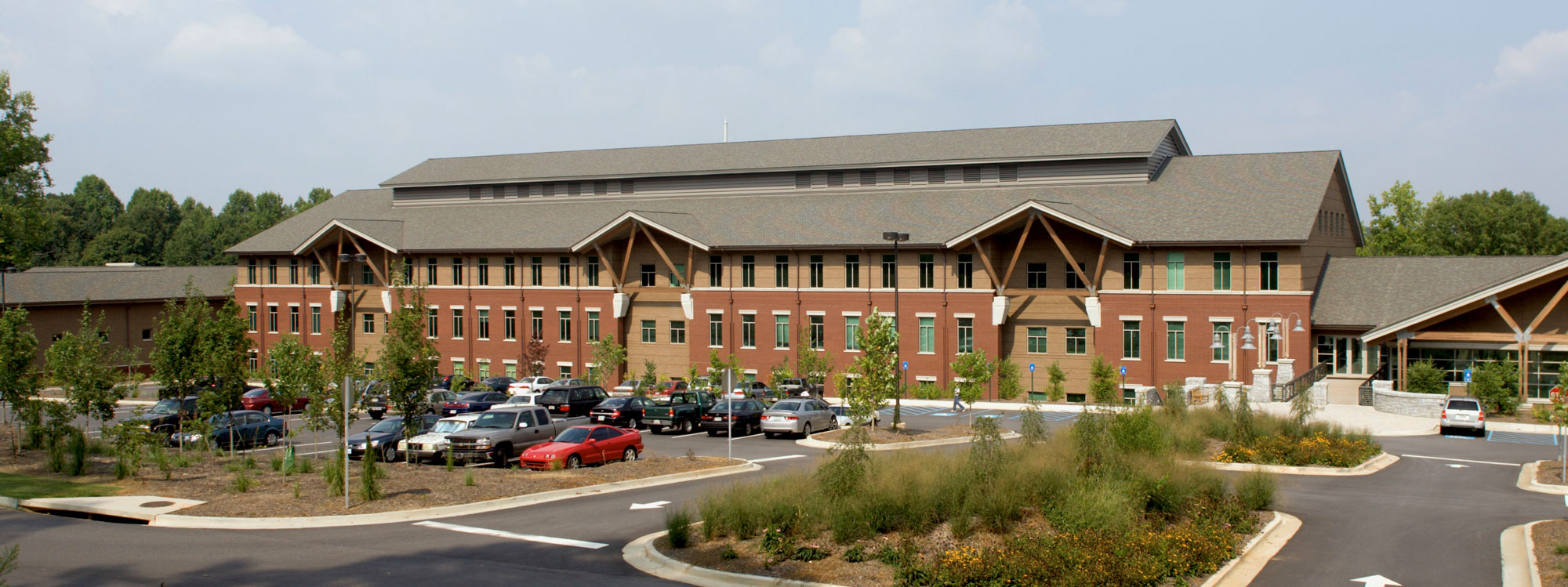
exterior of University of Georgia Complex Carbohydrate Research Center
The CCRC is one of the world’s leading organizations for the study of carbohydrates, also known as glycoscience. Based in a 140,000-square-foot facility near the UGA campus, CCRC will provide a home for the BioFoundry: GREAT project’s user facility, intended to educate, serve, and train aspiring glycoscientists and help democratize the potential for new advances in health and other applications possible through carbohydrate science. (Photo by Paul Efland)

Three-part strategy

As its name implies, the BioFoundry will focus on three activities to spread the gospel of glycoscience: resources, education, and training, all to be made available to collaborators and clients through a dedicated user facility that will be based at CCRC. The first component—resources—capitalizes on the center’s world-renowned collection of research talent. The idea is to leverage CCRC’s research and technology development to provide better tools for new and aspiring glycoscientists to use in their work.

For example, enzymes are critical to the formation and structure of glycans. Kelley Moremen has spent decades studying the biochemistry, structure, and regulation of enzymes involved in the creation of glycoproteins. One of the resources BioFoundry will make available are those very enzymes.

“We’ve focused historically on mammalian enzymes,” said Moremen, Distinguished Research Professor at CCRC, “but now with the BioFoundry, we have a mandate to expand that to an all-species space, from bacteria to plants to microbes—basically all of biology—to understand the enzymes involved in glycan production, how they work, and what are the types of structures they make.”

Moremen, Wells, and CCRC Assistant Professor Breeanna Urbanowicz also will work with Professor Natarajan Kannan, Georgia Cancer Coalition Distinguished Scholar, to create computational resources that use artificial intelligence and machine learning to exponentially expand what is possible in carbohydrate research. Kannan is a member of the UGA Institute of Bioinformatics, and both he and Urbanowicz have appointments in the Franklin College of Arts & Sciences’ Department of Biochemistry and Molecular Biology.

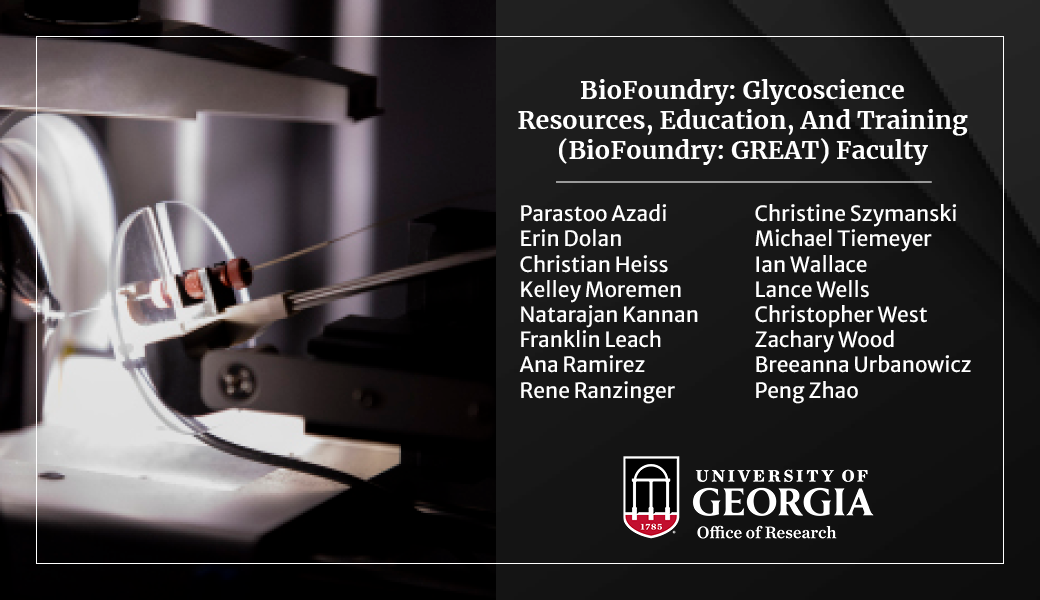
BioFoundry: Glycoscience Resources, Education, And Training Faculty: Parastoo Azadi, Erin Dolan, Christian Heiss, Kelley Moremen, Natarajan Kannan, Franklin Leach, Ana Ramirez, Rene Ranzinger, Christine Syzmanski, Michael Tiemeyer, Ian Wallace, Lance Wells, Christopher West, Zachary Wood, Breeanna Urbanowicz, Peng Zhao

Teaching glycoscientists to fish

Glycans are a basic building block of life, and the surfaces of all biological cells have a complex and diverse coating of glycans that greatly influence interaction and communication with other cells.

But the applications of glycobiology go far beyond the medical life sciences. Multiple CCRC researchers study the role of carbohydrates in the production of biofuels and have leadership roles in organizations like the Center for Bioenergy Innovation at Oak Ridge National Laboratory. Others study how glycans are involved in the production of plant-based new materials.

Researchers working in these areas and more will be welcomed at the BioFoundry user facility, which is intended to be a full-service operation. CCRC’s Analytical Services & Training (AST-CCRC) unit, one of UGA’s core research facilities, provides instrumentation services and hands-on training for clients around the world. Parastoo Azadi, executive technical director of AST-CCRC, will also oversee the BioFoundry user facility.

Just like AST-CCRC, that user facility will be happy to perform analyses and instrumentation work for BioFoundry clients—free of charge, provided their goals align with the project’s mission—but the emphasis will be on giving clients the training and tools to do the work themselves.

“Through this facility, we’re going to interact with scientists in different disciplinary areas,” Azadi said. “Whether they’re in the plant area, bacteria and microbial area, mammalian proteins, and whether they are interested in industrial applications, medical applications, production of biofuels or new materials—all of these people can come to this hub and get what they need.

“We will create training and education programs for them so they can do this themselves. That’s a major component—we want them to do it themselves.”

Not only does the NSF award allow potential clients to have their analytic work done at a greatly reduced price or even for free, it even provides funding to bring clients to Athens for short training residences.

“We’ve been doing training at CCRC for a long time, but the reality is we have a lot of really high-end instrumentation,” Wells said. “If you’re not from a big research school, you come here, you get trained, and then you go back to your university but you don’t have a 900 MHz NMR (nuclear magnetic resonance) machine.

“One of the things we’re doing with the training aspect,” he said, “is actually bringing people in longer term and allowing them to do their project here with our cutting-edge instrumentation.”

“We want glycobiology to become part of what we think of when we think about life science, both on the education and the research side.”

– Lance Wells, Principal Investigator, Distinguished Research Professor, and Georgia Research Alliance Distinguished Investigator at CCRC

Playing the long game

Perhaps most important for glycoscience in the long term is the BioFoundry’s third major component: education.

“Most people, when they think of carbohydrates, think of sugar icing on donuts, or how you nutritionally bring in carbs and convert them into energy,” Moremen said. “That certainly is part of the role of carbohydrates in biological systems, but most people are completely naïve to the massive collection of other carbohydrate functions. Eventually, carbohydrate science needs to be inserted into teaching modules at all levels.”

That’s where co-investigator Erin Dolan comes in. Dolan, Meigs Distinguished Teaching Professor and Georgia Athletic Association Professor of Innovative Science Education in Franklin College, focuses her research on student learning, development, and success. She will lead an effort to develop educational experiences that promote the BioFoundry’s mission, such as glycoscience modules for existing chemistry or biology courses, standalone courses for undergraduate and graduate students, and hands-on summer courses for beginners.

“The fact that we entirely neglect the sugar chains that influence the functions of all the other biological components is deeply problematic,” Dolan said. “When you’re talking about glycoscience research, you’re talking about the next generation of scientists. How do we build capacity in that scientific community? You have to think about humans, and that’s the perspective I bring to this: I study humans.”

Dolan’s work initially will focus on raising the visibility of glycoscience in undergraduate and graduate education to a level comparable to the other elements of biology. But she is also playing the long game of influencing K-12 curricula by trying to make carbohydrate science a foundational aspect not just of science education, but in the education of science educators.

“I don’t think any of us envision going into high school classes and taking over curriculum,” Dolan said. “But think about where teachers take their science coursework: They take it as undergrads, right here at UGA or across the country at their undergraduate institutions. If we can make sure that future teachers have access to this information, that allows us to have an impact on high school education much bigger than simply focusing on classrooms in Athens.”

“If we listen to others in our field, including our key personnel associated with the BioFoundry ” Wells said, “if we provide resources to the laboratories through research and technology development, if we provide education materials at all levels, if we work closely with industry to provide new tools, if we provide better and more thorough training, and if we bring it all together, we’re going to have some exciting discoveries that will lead to commercial applications in bioengineering, biomaterials, biomedicine and bioenergy, as well as increasing knowledge of glycans in classrooms and research labs across the globe.”

Categories
News

Ten university-wide projects devoted to advancing interdisciplinary research across multiple application areas have been awarded Presidential Interdisciplinary Seed Grants as part of the 2023 cohort.

The Presidential Interdisciplinary Seed Grant Program was launched in 2017 and offered again in 2019 and 2021 through a partnership between the offices of Research and Public Service and Outreach. Its success is reflected by the value of external grants subsequently won by teams to pursue work initiated through these seed grants. These 10 awards were chosen from 70 proposals and reflect a commitment of $1 million from UGA President Jere W. Morehead.

For the first time, this year’s program has two tracks: New Frontiers and Cluster Engagement. The New Frontiers track is intended to support early-stage exploration of potentially transformative research that addresses grand challenges at the community, state, national, or global level.

Marshall Shepherd leads one New Frontiers project, incorporating researchers from atmospheric sciences, geography, planning, and engineering. The project is a collaboration with industry partners to mitigate urban heat stress on both citizens and infrastructure. In addition to UGA researchers, the project will feature partnerships with The Ray, Pirelli Tires, and ESRI, a developer of geographic information software.

“I have been on previous Presidential Interdisciplinary Seed Grant projects and am always stimulated by how they change the rules of engagement in a positive way,” said Shepherd, a Georgia Athletics Distinguished Professor in the Franklin College of Arts and Sciences Department of Geography. “Challenges within society are not in silos, so the solution space should not be either.”

Carl Vinson Institute of Government Associate Director Shana Jones also is leading a New Frontiers project that establishes UGA as a testbed for electric vehicle implementation and to inform both academic and applied research by establishing EV adoption and infrastructure on campus.

Partnering with researchers in the Terry College of Business and College of Engineering, Jones and her team plan to create key data sources and establish foundational metrics to increase overall EV usage and accessibility across the state.

“Interdisciplinary research spurs creativity and innovation. Problems are multi-faceted, requiring multiple methods, ideas, perspectives, and goals,” Jones said. “Leveraging expertise across disciplines multiplies impact.”

The Cluster Engagement track is devoted to addressing one or more themes of the 10 interdisciplinary clusters of the Presidential Interdisciplinary Faculty Hiring Initiative in Data Science and Artificial Intelligence. Consistent with UGA’s 2025 Strategic Plan goals, successful seed projects will lay the foundation for creation of an ecosystem that connects research, innovation, entrepreneurship, and partnerships with communities.

Each of the Cluster Engagement Awarded teams have at least one cluster hire, including two that are led by AI/data sci cluster hires.

Roberto Perdisci, a professor in the School of Computing, is the principal investigator for a project addressing AI-generated deepfakes and possible socio-technical solutions. The term “deepfake” refers to realistic AI-generated images, videos, or audio that can be used to create fake but believable content and thus mislead humans.

While the AI technology behind deepfakes can have legitimate uses, such as in the entertainment industry, it can also be used maliciously to manipulate perceptions of real-world facts, such as in cyber-warfare, election manipulation, and misinformation/disinformation campaigns on social media.

“Deepfakes can pose serious risks to society overall. Without a reliable solution, they might allow anyone to reject or discredit real events reported by the news media as fake,” Perdisci said. “It is critical to investigate how humans perceive digital media and how the results of detection systems can be effectively communicated to empower them to make better informed decisions. Similarly, any solution to this problem will need to be implemented within—and supported by—regulatory frameworks and laws.”

Perdisci’s team is made up of experts in AI, cybersecurity, journalism, public policy, and law.

Full listing: 2023 Presidential Interdisciplinary Seed Grant projects

“From Bench to Bed Net: Developing Novel Antimalarial Inhibitors for Killing Plasmodium in the Malaria Mosquito.” Douglas Paton (primary investigator, College of Veterinary Medicine: Department of Infectious Disease); Chester Joyner (Center for Tropical and Emerging Global Diseases); Pejman Rohani (Odum School of Ecology).

“Developing Applied Institutional Ethics for the Age of AI: Interdisciplinary Approaches.” Youjin Kong  (primary investigator, Franklin College of Arts and Sciences: Department of Philosophy); L. Jason Anastasopoulos (School of Public and International Affairs); Jeremy Davis (Franklin College of Arts and Sciences: Department of Philosophy); Prasant Doshi (School of Computing); Matthew I. Hall (School of Law); Akshat Lakhiwal (Terry College of Business); Aaron Schecter (Terry College of Business); Ari Schlesinger (School of Computing); Christian Turner (School of Law).

“Using Precision Agriculture Technologies to Improve Pest Diagnosis and Spray Application to Address Pest Challenges Facing Key Fruit Crops in Georgia.” Ashfaq Sial (primary investigator, College of Agricultural and Environmental Sciences: Department of Entomology); Glen Rains and Brett Blaauw (College of Agricultural and Environmental Sciences: Department of Entomology); Phillip BrannenMd Sultan Mahmud, and Jonathan Oliver (College of Agricultural and Environmental Sciences: Department of Plant Pathology); Guoyu Lu (School of Computing); Simerjeet Virk (College of Agricultural and Environmental Sciences: Department of Crop and Soil Sciences).

“PCP HELPR: Primary Care Provider Healthcare Extension by Leveraging Pharmacists in Rural Communities through Telehealth Technologies.” Devin Lavender (primary investigator, College of Pharmacy); Rebecca StoneBeth PhillipsBlake JohnsonChelsea KeedySharmon OsaeRussell Palmer, and Henry Young (College of Pharmacy); Daniel Jung (College of Public Health); Daniel Hall (Franklin College of Arts and Sciences: Department of Statistics); and external collaborators.

“Reimagining Sustainability: Pioneering Upcycled Foods in Circular Food Systems.” Peng Lu (primary investigator, College of Agricultural and Environmental Sciences: Department of Agricultural Leadership, Education, and Communication); Alexa Lam (College of Pharmacy); Jiyong Park (Terry College of Business); James Gratzek (College of Agricultural and Environmental Sciences: Food Product Innovation and Commercialization Center); Abigail Borron(College of Agricultural and Environmental Sciences: Department of Agricultural Leadership, Education, and Communication); and external collaborators.

“Turning Blue to Green: Economic Development and Investment from Aquaculture in Georgia.” Mark Risse (primary investigator, director, UGA Marine Extension and Georgia Sea Grant); Amrit Bart (College of Agricultural and Environmental Sciences: Department of Animal and Dairy Science); Daniel Remar (College of Agricultural and Environmental Sciences: Agricultural and Applied Sciences); James Shelton (Warnell School of Forestry and Natural Resources); Issmat Kassem (Center for Food Safety); Thomas BlissBryan Fluech, and Eugene Frimpong (UGA Marine Extension and Georgia Sea Grant).

“Healing and Empowerment after Limb Loss in XR.” Kyle Johnsen (primary investigator, School of Electrical and Computer Engineering); Grace Ahn (Grady College of Journalism and Mass Communication); Fred Beyette (College of Engineering); Deborah Barany (Mary Frances Early College of Education); Ted Furtis (UGA Cooperative Extension, College of Family and Consumer Sciences).

“Socio-Technical Solutions for Countering AI-Generated Deep Fakes.” Roberto Perdisci (primary investigator, School of Computing); Jin Sun (School of Computing); Le Guan (School of Computing); Justin Conrad (School of Public and International Affairs); Sonja West and Thomas Kadri (School of Law); Bartosz Wojdynski (Grady College of Journalism and Mass Communication); Mark Lupo (Carl Vinson Institute of Government).

“Leading Georgia’s E-Mobility Innovation:  Informing Research and Decision-Making.” Shana Jones (primary investigator, Carl Vinson Institute of Government); Don LeoFred Beyette, and Tianqi Hong (College of Engineering); Gerald KaneMaric BoudreauJiyong Park, and John Rios (Terry College of Business); Justin Ellis (Office of Sustainability); Natalie Bock (Carl Vinson Institute of Government).

“Rubber-Modified Asphalt- A Potential Urban Heat Island Mitigation Strategy.” Marshall Shepherd (primary investigator, Franklin College of Arts and Sciences: Department of Geography); Brian Bledsoe (Institute for Resilient Infrastructure Systems); Rosanna Rivero (College of Environment and Design); Andrew Grundstein and Sergio Bernardes(Franklin College of Arts and Sciences: Department of Geography); Christina Fuller (College of Engineering).

Categories
News

Flu and infectious disease. Climate change. Aging populations. Global food supply. Big problems require big solutions—and the world is full of big problems like these.

Over the past several years, the University of Georgia has taken this statement as a challenge. And, with the help and support of a few carefully designed initiatives, UGA faculty are answering by teaming up with colleagues near and far to tackle problems that are simply too big for any one discipline to handle.

From the creation of the Office for Proposal Enhancement (OPE) to the debut of Presidential Interdisciplinary Seed Grant program, and through the launch of the Leading Large Interdisciplinary Research Teams (L2-IRT) workshop series, the university offers a portfolio of programs intended to help investigators form, initially fund and effectively run research teams. All of these programs are managed in whole or in part by Integrative Teams Initiatives in the Office of Research under the direction of Associate Vice President Larry Hornak.

The results have been impressive. Just one example: Through an overall UGA investment of $3.9 million over its first three cohorts, the Presidential Interdisciplinary Seed Grant program has supported projects that attracted nearly $322 million in subsequent external funding, resulting in an overall ROI of about 83 to 1.

But even more important is the ultimate impact of the research being funded. Multiple UGA research centers grew out of these interdisciplinary research teams, and these collections of investigators are making a difference right now, today, in the lives of people in Georgia and around the country and the world.

Investigators, assemble

Like superheroes, research teams all have their own origin stories. Some are the product of a single researcher’s vision, made real through an evangelistic determination. Others emerge organically from a group of investigators with a common interest in a problem, and still others form as spinoffs to an existing effort.

For associate professors Jenay Beer and Lisa Renzi-Hammond, co-directors of UGA’s Cognitive Aging Research and Education (CARE) Center, their project was born in a single conversation that took physical form and became part of the College of Public Health’s décor.

“One day we were sitting in a conference room and talking about our shared personal history of dementia in our families,” Beer said. “Lisa and I are very visual people, and the room had these big, glass windows, so we took our markers and started drawing on the glass walls our idea of a clinic and research space. I like to think it was a very ‘Beautiful Mind’ moment. That diagram stayed on the wall for two years!”

“We might have been a little bummed when someone finally cleaned the glass,” Renzi-Hammond added.


Lisa Renzi-Hammond stands in front of the glass wall at the College of Public Health where she and her Cognitive Aging Research and Education (CARE) Center co-director, Jenay Beer, first sketched out their idea for a new initiative to help Georgians living with dementia. “We might have been a little bummed when someone finally cleaned the glass,” Renzi-Hammond said. (Photo by Andrew Davis Tucker)

Brian Bledsoe, on the other hand, arrived at UGA in 2016 from Colorado State University with a mission.

“I was very happy and satisfied where I was, but when the opportunity came along, I saw tremendous potential at UGA for this kind of institute,” said Bledsoe, Athletic Association Professor in the College of Engineering and director of the Institute for Resilient Infrastructure Systems. “I spent that first year having conversations with folks from over a dozen academic units across campus with interest and expertise in resilience and water and infrastructure, and [what became IRIS] grew out of a small group of faculty spanning all these disciplines: engineering, ecology, economics, social science, law and policy, landscape architecture and many others.”

Yet another type of backstory lies behind Mark Tompkins’ team. Tompkins, Athletic Association Distinguished Professor in the College of Veterinary Medicine, had been an investigator with the Emory-UGA Center for Excellence in Influence Research and Surveillance, and he had aspirations of launching a similar program based in Athens when he assembled a team to apply for a Presidential Interdisciplinary Seed Grant in the first cohort in 2017.

Initially focused on the impact of microbial diversity on respiratory disease, Tompkins’ team ended up splitting into (at least) two different thrusts: One, led by Tompkins and Regents’ and Georgia Athletics Association Professor Pej Rohani in the Odum School of Ecology, developed a proposal that eventually became the Center for Influenza Disease and Emergence Research (CIDER), funded in 2021 by the National Institutes of Health (NIH) for seven years and up to $92 million.


One of initiatives taken to incentivize and recognize team research is the Team Impact Award, added to UGA’s Research Awards in 2022. Brian Bledsoe and the team behind the Institute for Resilient Infrastructure Systems took home the inaugural award. Pictured here are (left to right) Scott Pippin, Bledsoe, Shana Jones, Don Nelson and Mark Risse, representing such diverse units as the Carl Vinson Institute of Government, College of Engineering, Franklin College of Arts & Sciences, and UGA Marine Extension and Georgia Sea Grant. (Photo by Andrew Davis Tucker)

The other, led by Georgia Research Alliance Eminent Scholar Ted Ross, resulted in the largest single federal award in UGA’s history: One of NIH’s Collaborative Influenza Vaccine Innovation Centers was awarded to Ross and his team, to the tune of up to $130 million over seven years.

“Research teams are living, dynamic things,” Hornak said. “It’s not a linear process of moving from one program to the next in a rigid, defined order. Often you’re connecting smaller teams together, and this collection of teams—or what’s termed a ‘multi-team’—may hit upon different catalysts and end up moving in particular, different directions.”

Optimizing your team

Forming the team, of course, is merely a first step in changing the world. Teams are made up of individuals, each having their own priorities and collaborative style. Aside from the ground-level tasks of getting the actual work done, the team must be managed—and that can be a demanding task. Research on team science also shows there is an optimal team size for a given project yet no exact formula for how to arrive at it, just best practices to serve as a guide.

So how does a leader balance the value of adding more talent versus the unwieldiness of managing a larger team?

“Often when forming research teams, people are so worried about delivering the end product that they don’t think about who they’re working with or how they’re working with them,” said Karen Burg, vice president for research. “Intra-team dynamics are incredibly important to the team’s success. I liken it to a obstacle course challenge run, where teams compete but the team members on each team work with each other to overcome obstacles. It takes the talents of each team member and their willingness to collaborate, identifying each other’s talents and thinking creatively, in order for the team members to successfully cross the finish line together.”

UGA now offers a range of options to help its faculty become better leaders (and members) of research teams. In addition to assisting team formation, the modest financial awards available through the Teaming for Interdisciplinary Research (TIR) Pre-Seed Program allow newly formed groups to get to know each other and begin formative activities that help build strong working relationships among the team.


Other programs offer—even demand—more targeted training. The L2-IRT workshops offer a mix of instruction, guest speakers and hands-on activities to help researchers understand the nuances of working in an interdisciplinary team. It’s no accident that Dorothy Carter, a former UGA faculty member in industrial/organizational psychology, remains one of the workshop leaders.

“Faculty members are asked to do many things that are outside of typical ‘research’ or ‘teaching’ activities, and a lot of times, these are not skills they have received training to do,” said Carter, now an associate professor at Michigan State University. “The L2-IRT training program is meant to provide faculty with a deeper understanding of what it takes to lead large interdisciplinary teams and multiteam systems.

“It’s clear the participants are passionate about helping the world by achieving their big picture research goals, and they’re looking for help.”

Coincidentally, another source of that help also resides in East Lansing, Michigan, at Carter’s new university. The Toolbox Dialogue Initiative (TDI) is a consulting organization based at Michigan State intended to facilitate collaborative research, and the quality of its training is well known to decision-makers at federal granting agencies. Recipients of the 2023 Presidential Interdisciplinary Seed Grants will work with TDI to help move their projects forward.

“They must do it. It’s written into the solicitation: ‘Thou shalt spend some of your money to work with TDI,’” Hornak said. “There’s a method to this. TDI is one of a handful of groups nationally used by the National Science Foundation and other federal agencies when they form large, integrative centers. When our seed grant awardees submit subsequent proposals, we coach them: ‘Make sure you mention that you had this training and that your team is well-formed and operating effectively as a result.’”


“Research teams are living, dynamic things,” Hornak said. “It’s not a linear process of moving from one program to the next in a rigid, defined order. Often you’re connecting smaller teams together, and this collection of teams—or what’s termed a ‘multi-team’—may hit upon different catalysts and end up moving in particular, different directions.”

– Larry Hornak, Associate Vice President, Integrative Team Initiatives

The small level of discretionary funding provided by the TIR Pre-Seed Program can be enabling not only for team formation but also for proposal success, especially when received at the opportune time. Tompkins’ CIDER proposal was nudged along by exactly this kind of support.

“We used it to hold a meeting near the Atlanta airport so people could fly in,” he said. “We supported everyone getting together in the conference room of a hotel for the evening before and then nine hours the next day, and we fleshed out the outline of the contract we were going to submit. If we hadn’t gotten those resources, we wouldn’t have been able to do it. It was transformative in the sense that it created a lot of ideas.”

Indeed, proposal development is at the heart of UGA’s team research support. For years OPE has helped investigators—particularly those working on very large proposals—make their bids as strong and airtight as possible. In 2021, Hornak’s group launched its Major Integrative Proposal Planning (MIPP) award, which pulls in OPE’s existing services and provides additional resources for an even more robust grant proposal planning and development process that starts much earlier.

The MIPP program works with the PI and their unit to give an investigator time to concentrate on proposal development. Large integrative center proposals, including research workforce, outreach and innovation components, can take two years or more to produce a proposal. MIPP provides resources for professional project management of that process, as well as for facilitating a “red team” of external reviewers to offer input on the proposal draft.


Mark Tompkins and Pejman Rohani, from the College of Veterinary Medicine and Odum School of Ecology, respectively, assembled a multi-institutional team that in 2021 landed one of UGA’s largest awards in history, the Center for Influenza Disease and Emergence Research, awarded up to $92 million over seven years by the National Institutes of Health. (Photo by Peter Frey)

“We look for people with deep disciplinary knowledge but also a broader view of how that discipline connects to others,” Hornak said. “What we found to be most helpful is if the team lead has a professional network who we can select the red team from people who have a passion for the topic and are committed to giving strong, constructive criticism. That’s the sweet spot.”

Working to success

One of the biggest barriers to either forming or joining a team, Hornak said, is overcoming the notion that team research will add countless hours to a faculty member’s workload. He said working in a team does take more effort but also pays great dividends both professionally and personally. There’s no question that leading a research team comes with additional work, and he said the key is for leaders to build a strong core team whom they trust and can delegate to leveraging their unique strengths and passions. Investing the time up front to form that trusted core team will enhance—even multiply—the effectiveness of the team and allow for greater impact.

“It definitely has been a lot of work,” Beer said of launching the CARE Center. “But our goal as we grow and bring on more people is not to add to their plate, but to figure out how they can fit what they’re already doing into this existing, large research program.


One key to recruiting research team members is to find a cause that inspires passion. CARE Center co-directors Renzi-Hammond (left) and Beer said their project’s mission sells itself. “I have not yet met a UGA faculty member,” Renzi-Hammond said, “who heard about CARE And didn’t say, ‘Cool, can I help?’” (Photo by Andrew Davis Tucker)

“One thing that has helped is thinking about the public health problem with a really large lens,” she continued. “Let’s take diet and nutrition. What you eat that is good for your heart is also good for your brain; so with folks who are doing research in cardiovascular health, that applies to dementia health, as well. We’re not bringing on team members and urging them to change their trajectories or research programs—there’s a lot that fits under this large umbrella.”

“We do hear from some faculty who ask whether UGA still emphasizes and values individual work, and we absolutely do,” Hornak said. “What we’re doing is urging people to look around and see what larger effort their individual work might fit into, so that the proverbial whole is greater than the sum of its parts.”

For those research teams that are well thought out, well formed and well trained, there can be considerable returns. The financial ROI is just one metric. Over the first three cohorts of the Presidential Interdisciplinary Seed Grants, awards were made to 30 teams comprising some 329 individuals. As of mid-2023, more than 170 scholarly publications had emerged from those teams, along with nearly 400 research presentations.

And, of course, there is the ultimate payoff: impact. Progress toward a broadly effective flu vaccine, as well as improving our understanding the nature of seasonal flu infection and developing better plans for the next pandemic, continue under the CIDER and CIVIC awards. IRIS researchers work on mitigating the impact of flood events through more widespread use of natural infrastructure. And every day the CARE Center welcomes new dementia patients and their families, connecting them with the diagnostic, therapeutic and caregiving resources they need.

“It goes back to being at a land-grant university,” Bledsoe said. “We’re inherently oriented toward the improvement of people’s lives. IRIS faculty are here in part because they have that commitment to the greater good, and they know enough to know they can’t achieve that without a lot of collaboration.”

“I have not yet met a UGA faculty member who heard about CARE and didn’t say, ‘Cool, can I help?’” Renzi-Hammond said. “Our goal is not just to make something that serves Georgia and the university. Once this is all built, once the model is tried and true, any land-grant university in the country should be able to do it as well.”

Categories
News

In 2020, Professor Larry Hornak from the University of Georgia College of Engineering was appointed associate vice president in the Office of Research (OoR) with the responsibility of overseeing integrative team initiatives. Building on the momentum of the 2017 launch of UGA’s Presidential Interdisciplinary Seed Grant program and OoR’s existing Office for Proposal Enhancement, Hornak helped create more programs to incentivize, support and recognize team research that pulled together the talents of UGA faculty from multiple disciplines.

These programs range from funding support like the Presidential Interdisciplinary Seed Grant and the Teaming for Interdisciplinary Research Pre-Seed programs, to a workshop series for prospective team investigators, a robust proposal planning and review program for large projects, and more.

In this interview, Hornak discusses UGA’s strategic approach to facilitating integrative team research, the programs that are available for faculty to become involved in team projects, and the ultimate impact this type of work has on the world around us.

Why does it make strategic sense for UGA to offer support for team research projects?

There are many large and complicated problems that sponsors want to solve, and the problem doesn’t give a hoot about the disciplines it takes. It’s tackling the problem that matters. Solving those problems requires an interdisciplinary team approach, one that transcends and cuts across different boundaries and makes people work together to address the problem.

And we’re talking about problems like climate change, seasonal flu infection, sustainable transportation—grand challenges like that?

Yes, all of which people are very familiar with. If you pick any problem, there’s really a whole set of interconnected issues that contribute to it—and that must be addressed in a holistic way to solve it. People have heard about cybersecurity or cyber systems, quantum computing, things like that. Guess what? That’s not just a computer or computer chip—it’s a whole network of activity. They’re very cross-cutting, and if you don’t treat them holistically, you end up with solutions that may serve a particular function but don’t fit together to address the challenges of the whole system.

What have your priorities been as AVP for integrative team initiatives, and have they changed since you first stepped into the role?

I don’t know that they’ve necessarily changed, but perhaps they’ve evolved based on seeing what the needs were. I believe UGA faculty are very collaborative. They work together naturally. But this notion of leading larger teams and providing those team leaders and members with support—both in terms of professional development as well as financial support through seed programs—that’s been the focus. As well as providing support systems, things like project management support or red team review of their proposals.

Having world-class research is fundamental to large project competitiveness, but it is not enough. It needs to be integrated coherently, not only across disciplines, but also with workforce development, inclusivity, innovation and outreach activities to achieve the project’s vision. These can’t just be bolted on; they have to be really tightly knit and grown along with the world-class research from the very start. We’ve got to start working with faculty and their units really early—three years, five years in advance. If your goal is to go for one of these large, federally funded centers, whether it be NIH, NSF, USDA or DoD, then you have to be planning that far in advance and building the necessary foundational efforts and relationships.

With the Presidential Interdisciplinary Seed Grants, we’re having those projects work with something called the Toolbox Dialogue Initiative (TDI) at Michigan State University. Within the first couple months of their award, they work with them to form a firm foundation of what direction they’re going to go in and how it’s going to coalesce. In the 2023 seed grant round, we’re also requiring they plan a translation path for their work early on.

Seed grant recipients are encouraged to work with that program?

Yes. They must, actually. It’s in the solicitation. They will commit $4,000 of their award to do that. And there’s a method to this. That particular group is one of a handful nationally used by NSF and other federal agencies when they form big centers. So when our Presidential Interdisciplinary Seed Grant awardees subsequently submit larger proposals, we advise them, to make sure they mention that they’ve had this training. In doing so, they are increasing confidence on the part of the sponsor that an investing in a team is going to deliver—because many teams of complex projects fall short

Is there an order or an ideal arrangement of how these different types of support programs work together?

Well, first, people should know it’s not necessarily a linear process—if you get a pre-seed, you don’t necessarily go after a Presidential Interdisciplinary Seed Grant. What we’ve found is, because of that collaborative nature I mentioned, many times people who form a pre-seed may know somebody they collaborate with, one or two people, and then those people may collaborate separately with somebody else, so there is an opportunity for that original principal investigator (PI) to bring those two sub-teams together. We’ve found that often it’s not a bunch of individuals coming together, but rather pairs or groups of three. So you’re basically forming larger teams by connecting smaller teams.

Then what often happens is they get together, they have great conversations, and some subset of that group goes off and does something with even other folks. Again, it’s a living, dynamic thing. It grows in different directions.

“Having world-class research is fundamental to large project competitiveness, but it is not enough. It needs to be integrated coherently, not only across disciplines, but also with workforce development, inclusivity, innovation and outreach activities to achieve the project’s vision. These can’t just be bolted on; they have to be really tightly knit … from the very start.”

– Larry Hornak, Associate Vice President, Integrative Team Initiatives


Photo by Jason Thrasher

What are some misperceptions about UGA’s push into integrative team research?

We do hear things saying, “Well, we’re not emphasizing individual work anymore,” and that’s not true. We’re basically talking about helping that proverbial whole to be greater than the sum of its parts, which is what sponsors always seek with large teams. Usually the challenge for faculty is, “I want to do that, but I don’t want to lead it.” If we can provide the support for faculty to feel comfortable leading these projects, that’s going to create a lot more opportunity. For every effective leader we can help enable, there will be great faculty who would be willing to join them.

The Presidential Interdisciplinary Seed Grants and the pre-seed program have covered quite a bit on campus. What are some other programs or developments that are less well known?

One thing is the Research Training Support Group. Several of the federal agencies like NSF and NIH have training grants for supporting graduate students. These grants are critical to workforce development and also for faculty to competitively recruit the best students. The Research Training Support Group is a collaborative effort between the Office of Research, the Graduate School and the Office of Institutional Diversity. It’s a collaboration, because blending those three elements are key to any successful training grant. We know that faculty needed help to go after training grants, so we are trying to provide more up-front support for those types of activity.

What are the most common challenges faculty face when they’re trying to put a team together?

Probably most common is just being able to get people’s time. Faculty leaders need a compelling vision of what they’re trying to do, of what people will contribute for a proposal, and the bigger picture of what they’re trying to build. That helps attract team members, but the leader also has to put themselves in the shoes of the people they’re asking to join and find out what they’re interested in. That’s why the pre-seed program is so important; you get to know the people (if you don’t know them already) and what they value.

Any parting advice for faculty thinking about leading large team efforts?

Start early. Start with a working group and begin to build a core group of trusted individuals with whom you can share responsibilities. It’s a matter of shared value; you try to structure the team so that everybody’s getting value out. To achieve that shared value, develop a collaboration plan or team charter with your group. They go a long way towards building a firm foundation for a cohesive and resilient team. And don’t forget to reach out to us early to help!