

Generic selectors
Exact matches only
Search in title
Search in content
Post Type Selectors
Search in pages

Category: Creative Research Medal

Elizabeth Wright

Distinguished Research Professor 2020

Elizabeth Wright portrait

Elizabeth Wright, professor of Spanish, is an internationally recognized scholar of Spanish “Golden Age” literature and culture. With more than two decades of energetic, influential and innovative scholarship, she has cast a new light on how Spanish empire building after 1492 transformed the writing practices and literary genres with which individuals and communities made sense of a rapidly changing world. Her current book project, Stages of Servitude: Scenes from the Atlantic Slave Trade, examines how slave trafficking was made socially and economically acceptable in the Spanish world even as rulers and the public acknowledged its cruelty and illegality. But the study also explores how both enslaved and free blacks negotiated economic advancement and even claimed artistic validation. She is also editor of the Bulletin of the Comediantes, the premier scholarly journal devoted to the study of Spain’s Golden Age theater and 2019 winner for Best Journal Design given by the Council for Editors of Learned Journals.

Previous Awards

  • Albert Christ-Janer Creative Research Award 2019
  • Creative Research Medal 2017

Deepak Mishra

University of Georgia researcher Deepak MishraCreative Research Medal 2017

Deepak Mishra, associate professor of geography and leading international scholar in the use of satellite remote sensing techniques, co-created the Small Satellite Research Laboratory (SSRL) in January 2016, starting the space research program at UGA. The goal of this program, made possible by funding from NASA and the Air Force Research Lab, is to launch student-built low earth orbit satellites, aka CubeSats, by 2018 that also provide faculty with unique space-based data that will advance research on coastal ecosystems, marine processes and water quality. Mishra and colleagues assembled a 50-member team of faculty and students from physics, mathematics, computer science, marine science, geography, engineering, design and management, among other departments, to guide the missions. These projects will develop cutting-edge technologies, including running “structure from motion” techniques from an orbiting platform—something never before attempted. The SSRL is an innovative, interdisciplinary research and experiential learning program that is anticipated to be a cornerstone of a future UGA aerospace program.

George Foreman

University of Georgia researcher George ForemanCreative Research Medal 2017

George Foreman, director of UGA’s Performing Arts Center and associate professor of music, guided the production of “Music for the Tsars: Works from the Russian Institute for the History of the Arts,” a CD that significantly advances music education and performance in Russia and the U.S. This massive creative and scholarly undertaking began in 2012 with the goal of highlighting the Russian Institute for the History of the Arts’ rich and largely unknown collection of 19th century wind band music. Foreman coordinated all components of production and recording, while also capturing the original intent and nature of the music. In 2014, the works were recorded in UGA’s Hodgson Concert Hall by Hodgson School of Music faculty and over 100 student musicians. This wonderful recording will have a lasting impact on the world of band literature, the lives of students and others who contributed, and the global perception and reputation of the university.

Katrien Devos

Distinguished Research Professor 2020

Katrien Devos portrait

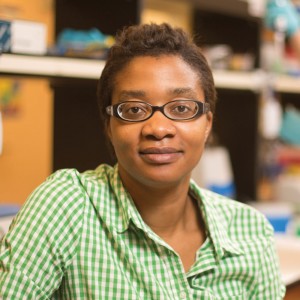
Katrien Devos, professor of plant genetics with joint appointments in Plant Biology and Crop and Soil Sciences, is an internationally recognized plant genomics researcher. She studies the structure, function and evolution of grass genomes, with a focus on cereals, bioenergy crops and halophytic turfgrasses. She helped lead the development of the “crop circles” concept, which demonstrates relationships among different grass genomes at the genetic level. Her laboratory combines basic and applied research to understand the genetics and evolutionary biology of crops such as wheat, switchgrass, seashore paspalum and millets. Millet species such as finger millet and pearl millet are important to food security in Africa and India. Devos works with East African breeders to design more resilient and sustainable cereal varieties. She and her colleagues recently led the sequencing of both the finger millet genome and its main fungal pathogen, blast, and now are searching for genetic factors that could enhance finger millet’s resistance to blast.

Previous Award

  • Creative Research Medal 2017

Xiangyu Deng

University of Georgia researcher Xiangyu DengCreative Research Medal 2017

Xiangyu Deng, assistant professor of food microbiology, is recognized for creating a bioinformatics tool that is helping transform global laboratory surveillance of salmonella, the most prevalent bacterial foodborne pathogen in the U.S. and worldwide. His creation, SeqSero, is a powerful web-based tool that offers a novel and rapid approach to serotyping salmonella strains obtained from infected humans, animals, foods and the environment during epidemiological investigations. His innovation replaces a complicated and time-consuming laboratory protocol with whole genome sequencing that allows accurate, fast “fingerprinting” of any salmonella strain. The impact of Deng’s creation on public health is enormous. As a result of his rare combination of bioinformatics expertise, epidemiology know-how and food microbiology background, SeqSero has cut analysis time from days to seconds, while adding no additional cost. The tool has been adopted by U.S. federal agencies and state health departments, as well as laboratories and regulatory agencies in other North American countries, Europe and Asia.

Yiping Zhao

UGA researcher in lab

Distinguished Research Professor 2016

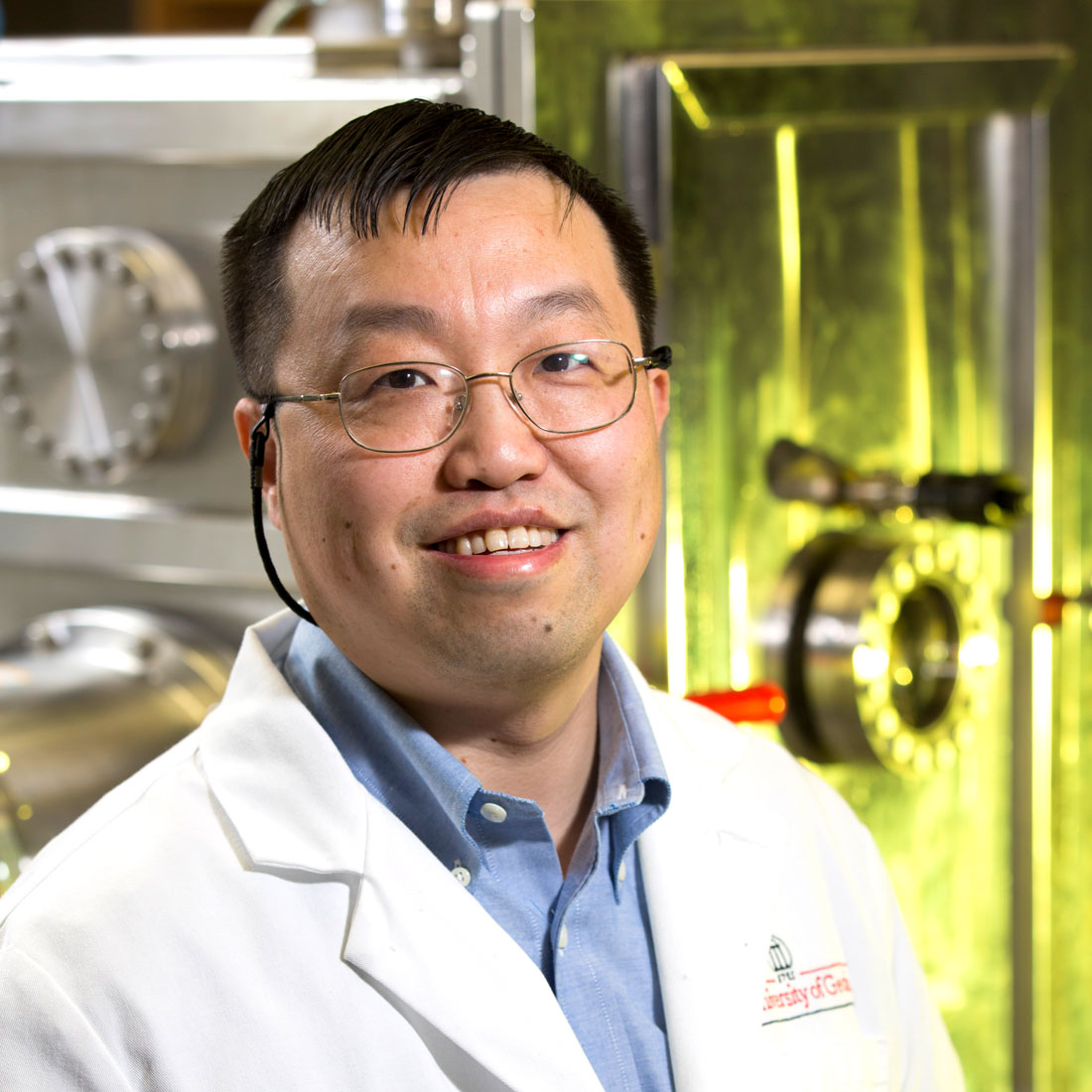
Yiping Zhao, professor of physics, has made tremendous contributions to the field of nanotechnology. He has developed a method to rapidly and accurately detect viruses, bacteria and chemical contaminants using a technique known as surface enhanced Raman spectroscopy, or SERS, which measures the change in frequency of a laser as it scatters off a compound. The signal produced by Raman scattering is inherently weak, but Zhao and his colleagues have arrayed silver nanorods 1,000 times finer than the width of a human hair at a precise angle to amplify the signal. This system may be used to detect pathogens and contaminants in mixtures such as food, blood or saliva. Zhao is also a recognized leader in the development of the glancing angle deposition (GLAD) technique for nanostructure design and fabrication. Using this process, Zhao is able to fabricate nanorod arrays that may be used as sensors for biological, renewable energy and nanomachine applications.

Previous Award
Creative Research Medal 2009


Daniel Nakano

Nakano-Daniel-1024x1024

Creative Research Award 2016

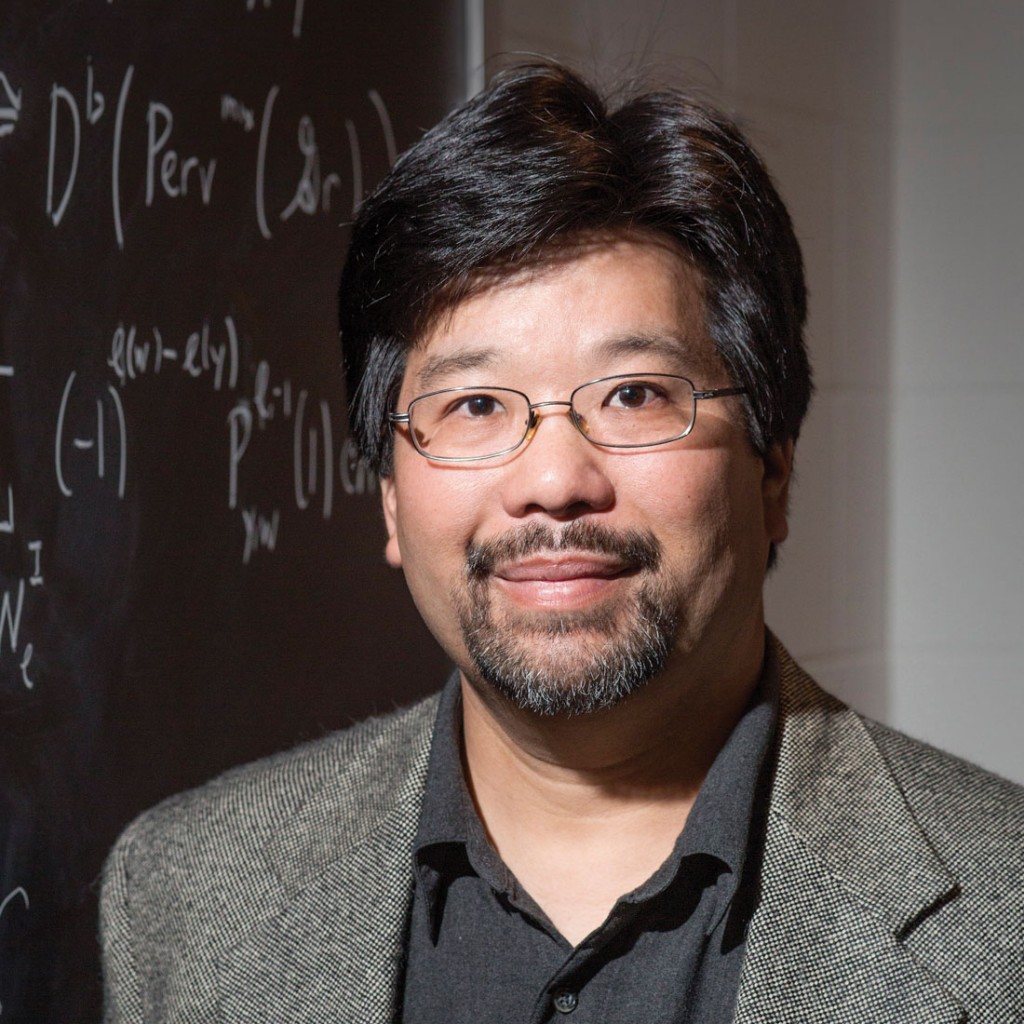
Daniel Nakano, Distinguished Research Professor of Mathematics, is renowned for his contributions to representation theory, which includes the study of Lie algebras, algebraic groups and quantum groups. This important branch of mathematics impacts many fields, including chemistry and physics, as it originated from attempts to understand symmetry in nature. In representation theory, an abstract algebraic entity is realized as matrices of numbers. Nakano’s research provides important fundamental advances, and he has a history of groundbreaking results through the creation of new approaches or solutions.  His expertise and leadership was critically important to the success of UGA’s National Science Foundation Vertical Integration of Research and Education in Mathematics Program, which was designed by the NSF to better integrate research into the mathematics curriculum at all levels. Nakano’s work has garnered international recognition and has contributed to making UGA a center of mathematics research in representation theory.

Previous awards
Distinguished Research Professor 2010
Creative Research Medal 2007

James Leebens-Mack

Distinguished Research Professor 2020

Jim Leebens-Mack portrait

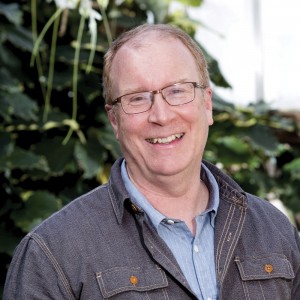
Jim Leebens-Mack, professor of plant biology, is a globally prominent researcher of evolutionary genomics and plant systematics and evolution. His research team fuses state-of-the-art evolutionary analyses with genomic approaches, advancing fundamental understanding of biological innovations in plant history. Leebens-Mack analyzes, annotates and builds databases of plant genomes, gene families and their evolutionary histories, using this information to determine the number and timing of gene and whole genome duplications. He co-led sequencing and analysis of the genome of Amborella trichopoda, a shrub-like tree species that diverged from other flowering plant species some 150 million years ago. The project was a milestone in plant biology and genomics, allowing Leebens-Mack and his team to document changes in ancestral genomes associated with the origin and explosive diversification of flowering plants. Leebens-Mack also spearheaded evolutionary analyses for the 1000 Plants Genome Initiative, an international consortium of scientists who have sequenced and analyzed transcribed genes from species across the plant kingdom.

Previous Award

  • Creative Research Medal 2016

Steve Kogan

William A. Owens Creative Research Award 2020

Steve Kogan

Steven M. Kogan is the UGA Athletic Foundation Professor of Human Development in the department of human development and family science in the College of Family and Consumer Sciences. Kogan’s research investigates important stressors that drive risky behaviors and mental health challenges among rural, Southern adolescent and young-adult African Americans, and then translates these findings into evidence-based family intervention projects. He undertakes longitudinal, quantitative modeling of the mechanisms that drive risky behavior across multiple levels and across time. Kogan’s research documents how community, family, genetic and psychological risk factors affect the well-being of young African Americans in general, and young men in particular.  His recent research examines whether family-centered interventions could be more effective if timed and implemented at crucial developmental transition points, creating real-world public health benefits by reducing risky behavior and substance abuse.

Previous Award

  • Creative Research Medal 2016

Jenna Jambeck

UGA researcher at landfillCreative Research Medal 2016

Jenna Jambeck, associate professor of engineering, is recognized for her groundbreaking work on waste management and marine debris. Over the last three years, she led a collaborative research initiative that, for the first time, rigorously quantified the amount of mismanaged plastic that flows into the global ocean from 192 countries with coastal access. Jambeck and her colleagues calculated that eight million metric tons of plastic enter the oceans every year, the majority from rapidly developing economies with lagging infrastructure. Without intervention, this annual input is expected to double by 2025. Jambeck’s study, published in the journal Science, has provided a new and important perspective on the issue of marine debris and plastic in our oceans. Her work has also spurred governments, industry and non-profit organizations to protect ocean wildlife and ecosystem health by developing and financing better waste management infrastructure to stem the tide of plastics entering the oceans.