[wpdreams_ajaxsearchlite]

Category: Lamar Dodd Award

Hitesh Handa

Lamar Dodd Creative Research Award 2026

Man wearing glasses, a checked shirt, and a dark blazer stands and smiles in front of a plain, neutral-colored background.

Hitesh Handa, professor in the College of Engineering, is an international leader in biomedical engineering whose work advances the safety and performance of medical devices. His scholarship integrates materials engineering, chemistry, and biomedicine, with a central focus on developing nitric oxidereleasing biomaterials that prevent thrombosis and infection on blood-contacting medical implants. Drawing on fundamental materials design and clinically relevant animal models, his laboratory creates bioinspired surfaces that mimic the body’s natural nitric oxide production, improving hemocompatibility and antimicrobial performance. Handa’s influence is reflected in more than 135 peer-reviewed publications and his strong international reputation in biomaterials research. His collaborative projects have secured over $25 million in funding from agencies including the NIH, CDC, and Department of Defense. Complementing his academic research, Handa has translated discoveries into practice through patents and startup companies focused on medical device innovation. Collectively, his achievements demonstrate sustained excellence with far-reaching scientific and clinical impact. 

James Martin

Lamar Dodd Creative Research Award 2026

James Martin, wearing glasses, a dark suit, and a light-colored patterned tie, stands smiling in front of a plain background.

James Martin, professor in the Warnell School of Forestry and Natural Resources, is an internationally recognized wildlife ecologist whose research reshapes conservation science and natural resource policy at national and global scales. Martin integrates ecological theory, advanced quantitative modeling, and large-scale field studies to address fundamental questions in wildlife population dynamics, harvest management, and land-use decision making. His work on game birds, particularly the northern bobwhite, has transformed how scientists and agencies evaluate population responses to habitat management and harvest, while also informing conservation strategies for a wide range of species and ecosystems. Martin is a leader in policy-relevant conservation research, including landmark evaluations of Farm Bill conservation programs and national assessments of working-lands initiatives that guide federal investment decisions. His scholarship includes more than 125 peer-reviewed publications in leading journals and has attracted over $20 million in competitive funding. Through rigorous, creative research conducted across landscapes and borders, Martin advances both ecological understanding and evidence-based conservation practice. 

John Drake

Lamar Dodd Creative Research Award 2026

A man with glasses and shoulder-length hair, wearing a brown blazer over a light blue shirt, smiles at the camera against a plain grey background.

John DrakeRegents’ Professor in the Odum School of Ecology, is recognized for a body of creative scholarship that has reshaped theoretical population biology and its applications to ecology, epidemiology, and public health. Drake integrates mathematical theory, statistical innovation, and high-performance computing to explain how populations fluctuate, spread, persist, or collapse. His foundational work on ecological unpredictability, extinction thresholds, and early warning signals established new frameworks for anticipating critical transitions, influencing research in conservation biology and climate science. Drake has extended these insights to infectious disease dynamics, developing data-driven and mechanistic models that improve forecasting of epidemics, including COVID-19, influenza, and zoonotic spillover. By uniting machine learning with ecological theory, his research has produced predictive tools adopted widely by scientists and public health agencies. With more than 200 publications in leading journals and sustained support from federal agencies such as NSF, NIH, and CDC, Drake’s work exemplifies creative research that advances theory while addressing urgent global challenges. 

Pejman Rohani

Lamar Dodd Creative Research Award 2025

A man wearing glasses, a dark blue suit, white shirt, and red patterned tie poses against a dark background.

Pejman Rohani, Regents’ Professor and UGA Athletic Association Professor in Ecology and Infectious Diseases in the Odum School of Ecology and College of Veterinary Medicine, studies the ecology of infectious diseases. Since joining UGA in 2015, he has established an internationally recognized body of work focused on population dynamics, host-pathogen interactions, and the mathematical modeling of diseases. His research has provided critical insights into disease transmission, vaccination strategies, and epidemic forecasting, influencing global public health policy. Rohani serves as deputy director of the Center for Influenza Disease and Emergence Research (CIDER), an NIH-funded initiative advancing the understanding of influenza and emerging pathogens. He has authored over 160 peer-reviewed publications and co-authored a widely cited book on infectious disease modeling. A Fellow of the American Association for the Advancement of Science and the Ecological Society of America, Rohani’s expertise has been sought by the World Health Organization and the Institute of Medicine.

Scott Merkle

Lamar Dodd Creative Research Award 2025

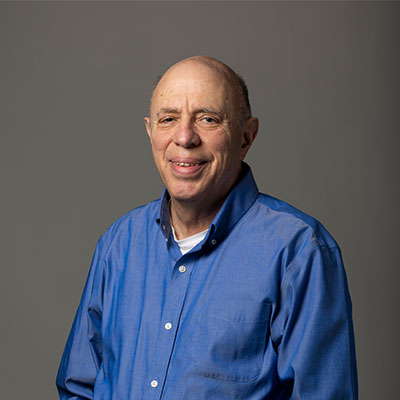
Older man with short hair wearing a blue button-down shirt, standing and smiling in front of a plain gray background.

Scott Merkle, professor in the Warnell School of Forestry and Natural Resources, is a leading researcher in forest tree biotechnology. A major focus of his work has been the conservation and restoration of the American chestnut, a once-dominant species nearly eradicated by chestnut blight. Merkle’s lab was the first to develop a somatic embryogenesis system for the species, enabling large-scale propagation and genetic transformation efforts aimed at producing blight-resistant trees. His work has supported broader restoration initiatives, including collaborations with the American Chestnut Foundation and the Forest Health Initiative. Merkle has applied similar biotechnological approaches to other threatened species, such as hemlocks and ash trees, and has contributed to phytoremediation research using genetically engineered trees to detoxify contaminated soils. His extensive research, spanning in vitro propagation, conservation, and genetic engineering, continues to inform efforts in forestry and environmental restoration.

WenZhan Song

Lamar Dodd Creative Research Award 2025

A man wearing glasses and a light blue button-up shirt stands against a plain gray background, facing the camera with a neutral expression.

WenZhan Song, Georgia Power Mickey A. Brown Professor in the College of Engineering, is a leading researcher in sensor networks, cyber-physical systems, and security. His work integrates artificial intelligence and the Internet of Things (IoT) to enhance infrastructure security, energy resilience, and healthcare technologies. Song has pioneered breakthrough IoT innovations that enable real-time, non-intrusive health and activity monitoring for humans, animals, machines, and infrastructures. His research in cyber-physical security has led to advanced systems that fuse cyber and physical signals to detect and mitigate threats to smart grids and industrial systems. He has also developed zero-trust IoT data infrastructure to ensure secure, reliable, and privacy-preserving data storage and sharing. Many of his smart IoT technologies have been adopted in real-world settings. As director of UGA’s Center for Cyber-Physical Systems, Song leads interdisciplinary initiatives that drive innovation and industry partnerships. His contributions have earned him numerous accolades, including the IEEE Mark Weiser Award.

James C. Beasley

Lamar Dodd Creative Research Award

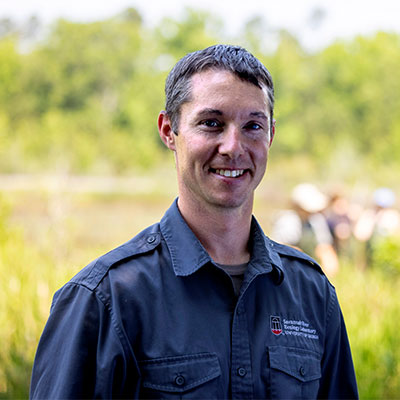
Photograph of James E. Beasley

James C. Beasley, Terrell Professor of Forestry and Natural Resources in the Savannah River Ecology Laboratory and Terrell Professor in the Warnell School of Forestry and Natural Resources, has developed an acclaimed research program in wildlife ecology and conservation. His innovative and interdisciplinary approaches to the study of radioactive contamination in the environment and its effects as an ecological stressor have challenged fundamental assumptions about the status and health of wildlife in radiologically contaminated landscapes, leading to the discovery of abundant and diverse wildlife communities. Since 2014, he has served as the International Atomic Energy Agency’s wildlife adviser to the Fukushima Prefecture government in Japan in response to the 2011 tsunami and nuclear accident. He is recognized as one of the world’s experts on invasive wild pigs, building one of the most important academic research programs studying invasive wild pigs in the US. And he is engaged in high-impact carnivore conservation research projects to reduce human-wildlife conflicts globally.